
Shopping Cart
There are no more items in your cart
.jpg)


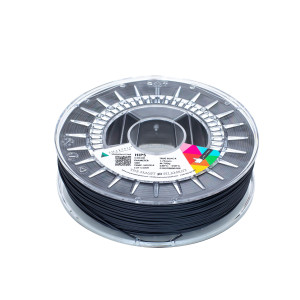


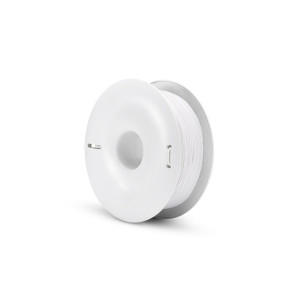
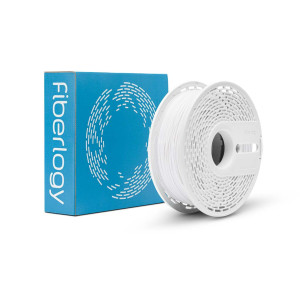

Supports on ABS parts dissolve in d-limonene.

Low density, impact and water resistant.

Fiberlogy lists a heat deflection temperature of about 80 °C.
The Simplify3D guide says this material needs a heated bed and recommends a heated chamber and ventilation. It prints in the same range as ABS, which makes it a practical support for dual-extruder ABS jobs.
Soluble support with ABS on a dual-extruder printer.
Water-soluble PVA is a better match for PLA.
Check that the printer supports the main material and soluble support within one job. A filament-changing arrangement can require a different process plan from a system with independent nozzles. Assess the shared environment, bed conditions and approved profiles for ABS and the support filament together. Review every supported contact face in the slicer.
Printing the entire support in soluble material and using it only at the interface lead to different material use and cleanup work. If the slicer supports the distinction, compare both on the same sample. For internal channels, consider how solvent will enter and leave. Resolve removal of support in enclosed spaces during design before starting the full model. Section previews help reveal support that would otherwise remain hidden.
Inspect accessible support and the main part after printing. Read the filament and solvent safety documents before using d-limonene. Select containers, ventilation and protective equipment from those instructions. Do not transfer a cleaning recipe from another material. Check product documentation for the d-limonene compatibility of coatings and other components.
After the recommended removal procedure, check that channels remain open and supported faces are free of residue. Avoid assuming a universal dissolution time; support quantity and access vary by job. Handle solvent and residues according to the safety document and local disposal requirements. Try the part in its mounting location and check that critical holes are clear.
This filament can also form a lightweight matte visual model as the main build material. Fiberlogy describes a surface that can be sanded and painted with acrylics. Review support marks and joint lines before painting, then test primer and paint on a small area. Compare how much fine detail remains after sanding.
A model may contain a wide flat base, while a housing needs intact corners and screw bosses. Match the recommended heated bed and printing environment to the printer's capability. For corner lifting, review cleaning, adhesion and temperature changes. A general impact-resistance description does not establish that a particular thin feature will resist fracture. Assess the intended behaviour on the finished specimen and keep photographs with its profile record.
Why 3D Grande?

Smart Materials 3D and FlashForge distributor for Türkiye; Fiberlogy and Azurefilm supplied by 3D Grande.

Shipped within 1 business day, delivered in 2–4 business days across Türkiye.

Returns accepted within 14 days; we cover return shipping.
Let's Plan Your HIPS Print
Tell us your printer and how you will use HIPS, and we will recommend a filament.
About
HIPS (High Impact Polystyrene) is polystyrene toughened with rubber for higher impact resistance. In FDM printing it is most often used as a soluble support for ABS parts: after printing, the part soaks in d-limonene and the support dissolves. Light, water resistant and matte, it also works as a main material for models and props that will be sanded and painted. It needs a heated bed, and a heated chamber and ventilation are recommended. 3D Grande stocks Smart Materials 3D Smartfil HIPS and Fiberlogy HIPS in 1.75 mm and 2.85 mm.
Discuss material selection separately for the main model and for support. A visual-model team prioritises preparation for paint; a team needing inaccessible support in an ABS body plans dissolution and final inspection. One filament name does not make these preparations identical. Share the printer system and a section view when making an enquiry, identifying where support will form.
For a dual-material job, save each extruder's material assignment with the file. Confirm in the preview that the main body uses the intended material. Marking the faces to measure after support removal gives a more concrete acceptance criterion than external appearance alone.
Related pages: Fiberlogy HIPS · Smartfil HIPS · ABS filament · PVA filament
